Posts Tagged “joseph”
Shabbat Shalom, everyone, and an extra prayer for peace in Gaza. It is my hope and the hope of many in this world that this time next shabbat the conflict will have ended.
The Torah portion for today is Vayechi, Genesis 47:28-50:26. In this parsha, we see the deaths of both Jacob and his son Joseph. In the sense of raw plot, not a lot happens in this parsha, but there is a great depth of symbolism in the little bit that does happen.
The parsha opens with the aging and eventual ill health of Jacob, the last of the three patriarchs. As we saw last week, Joseph revealed himself to his family and gave them a home in Goshen, a territory within Egypt where he was a powerful political figure. As Jacob lay dying, he requests that his body be taken back to Canaan so he can be laid to rest in the same cave as his parents Isaac and Rebecca, his grandparents Abraham and Sarah, as well as his wives Leah and Rachel. But before that happens, there is a very interesting episode involving Joseph’s sons, Manassah and Ephraim.

At this point, Jacob is blind and infirm. He calls Joseph to him to explain his burial wishes and also to bless Joseph and his sons. Jacob gives a blessing to the boys, his left hand on the head of Manassah and his right on the head of Ephraim. In that culture at that time, the right hand represented the stronger and the better side of things. In this case, when Jacob passes the blessing of God’s promise to make his descendants a great and prosperous people, he gives the better part of the blessing to Ephraim. At first, Joseph believes his father is mistaken because he is blind. Ephraim is the younger of the two brothers and therefore not traditionally entitled to a greater portion of an inheritance. But when Joseph attempts to correct Jacob, Jacob insists that he knows exactly what he’s doing and that the blessing of the second born is intentional.
Later, as Jacob essentially reads his last will to his sons, he once again breaks with the tradition of allotting inheritance by the order of birth. Rather, Jacob gives his portions and blessings to his sons based on their righteousness. Those who were violent get nothing, those who were irresponsible get next to nothing, those who were lazy get very little, and those who were good and holy inherit wealth and power. Interestingly, this part of the parsha reads like a poem pasted into the regular story. It is full of metaphors and powerful imagery. This isn’t in a poetic format just to be fancy. Jacob’s sons are each the progenitors of the famous twelve tribes of Israel. The listing of their crimes and virtues is epic because it represents an entire nation, not just a family.
This is not the first, nor the last time the Torah uses small groups of people to represent whole societies. This episode belongs to a recurring theme in the Torah about responsibility throughout the generations. By allotting the wealth and blessings of his people based on merit, Jacob sets the precedent that the soon-to-be-Jewish people are not just another dynasty ruled by notions of power. Not only does this create a focus on justice, it also serves as a strong allegory for how we affect future generations with our present acts. Like this story’s previous threads about preparedness, the reading of the will of Jacob warns us that the lives we lead echo throughout time. A life of violence leads to a fallow future, a life of complacency leads to empty servitude. We are most certainly meant to read this portion and ask ourselves what legacy we will leave to future generations. Do we deserve to receive the blessings of our fathers, or have we yet to earn it?
1 Comment »
Shabbat Shalom and Happy New Year. The parsha for this week is Vayigash, the story of how the House of Israel actually came to live in Egypt. This is a particularly interesting episode in the Torah because it is one of the most overtly literary moments in the Five Books. It is full of drama, symbolism and most of all foreshadowing.
This parsha starts in the middle of a chapter. Judah entreats Joseph to reconsider his decision to take Benjamin, Joseph’s youngest brother, as a bondsman after framing him for theft. Joseph chooses to finally end his ruse and reveal his true identity to his brothers. When they come before him to beg for the release of Benjamin, Joseph tells them who he is. He also tells them that he harbors them no ill will, saying that it was God who sent him to Egypt, not his brothers.
Here we have an interesting opportunity for a philosophical discussion. This entire parsha sits at the fulcrum of many events, past and future, that indistinguishably mix the good with the bad. There is an inexplicable sense of cause and effect. Joseph is betrayed by his brothers and languishes in slavery, but had he not he would never have risen to his position of authority in Egypt. By the same turn, had Joseph not come to Egypt the pharaoh wouldn’t have been prepared for the seven years of famine and the entire empire would have starved, including Joseph’s family in Canaan. Like dominoes, events keep triggering new events.
After Joseph reveals himself to his brothers, he invites his entire family to come to Egypt from Canaan. This includes dozens of people, essentially an entire clan and the seeds of a nation. Of course, had Joseph not invited his family to live in Egypt, the Israelites would never have become slaves to Ramses, and therefore never would have been freed by God and led to the Torah.
The story of Joseph is the story of the Jewish people in microcosm- To go from comfort to slavery, then from slavery to humble exaltation. The parallel events in both stories are convoluted. The bad directly results in the good, with the good paving the way to the bad. The question we must ask ourselves is, how do we approach life when this dynamic is ever-present?
Everyone experiences their share of good times and tragedies. Our relationships with one another are complex and the longer we know one another the more likely we are to retain some kind of emotional “baggage” that further complicates how we feel and how we act. The stories of Joseph and then of the Israelites are stories of the human condition. Not only are we bound to experience ups and downs, we are also generally incapable of seeing what good or bad things will result from the conditions of the present. It is exceedingly easy to simply remind people to have faith that good will grow from the bad. As the parsha says, God went with the Israelites when they went to Egypt. But as we discussed last week, “going with God” does not guarantee happiness.
The best insight we can gather from this parsha is that, in all of this complicated business with the mixing of good and bad, there are still moments of volition. Joseph chooses to re-embrace his family. God does not command it of him, neither does etiquette. In the midst of all this confusion, Joseph listens to his emotions and makes a decision in his life to welcome some goodness into the present. We small humans will spend most of our lives getting tossed around by past, present and future bouts of good and bad. What makes our lives meaningful are those rare opportunities for choice.
No Comments »
Shabbat Shalom. It’s time once again for Shabbat Torah Study. Today’s parshah is Mikeitz, Genesis 41:1-44:17.
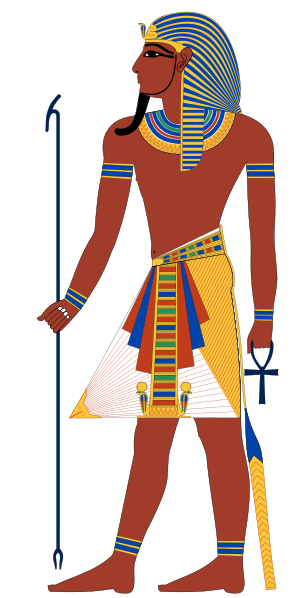
In this parshah there is a lot of drama. Joseph, who proved himself an apt dream interpreter last week, gets a chance to analyze two very troubling dreams had by the pharaoh himself. In the pharaoh’s first dream, seven head of strong cattle come up from the River Nile, followed by seven more who are weak. The weak eat the strong so that there is no trace of the strong remaining. In the second dream, a similar episode occurs involving stalks of corn. Joseph’s interpretation through God is that Egypt will experience first a seven-year period of high production and prosperity, followed by seven years of famine.
In an interesting bit of his interpretation, Joseph tells the pharaoh that he had two similar dreams because it is God’s way to assure pharaoh that the events alluded to in the dreams will most surely pass. In fact, repetition is a common device used in the Torah to indicate truth. The earliest example is when God tells Adam and Eve not to eat from the Tree of Knowledge. The common translation of this episode is, “For if you eat of it, you will surely die”. The actual translation would read, “If you eat of it, dying you shall die”. The repetition in the phrase indicates truth by way of emphasis. Accordingly, the 14 year period of feast and famine does happen in Egypt.
There is a running theme in this parshah is preparedness. Pharaoh’s dreams are messages from God to be prepared for trouble, even when life is good. Essentially, it is a lesson about the necessity of foresight in a leader. The entire Egyptian Empire relies on the pharaoh to see beyond immediate circumstances. In this parshah, those who don’t even attempt at foresight suffer.
When Joseph is first called before the pharaoh to interpret the dreams, the Torah takes time out to tell us that Joseph made sure to shave and bathe. As always, there are no wasted words in the Torah. This begins the theme of preparedness. To use one of our own colloquialisms, Joseph puts his best foot forward. By preparing himself physically, he also prepares himself mentally. Standing before the pharaoh, Joseph is confident but not arrogant, he is honest and he is polite.
Compare this to the scenes later in the parshah when Joseph’s brothers come to Egypt to buy food. They are only concerned with their immediate problems, first their hunger and then Joseph’s request to see their youngest brother. Because they show no foresight, because they are ill-prepared for everything, Joseph’s brothers experience fear and loss.
This is a lesson we can easily apply to our own lives. Preparing ourselves, even in superficial, cosmetic ways, can help us enter a focused mindset. Thinking beyond our immediate conditions can save us a lot of grief in the future when those conditions change. Taking time to groom, dress and practice for a job interview can make the difference between employment and rejection. Mental preparation for the loss of a sick loved one can make the difference between strength in a time of need and incapacitation by grief. Life, in its good times and bad, happens. How well we face those changes in life is entirely up to us as individuals.
No Comments »
The Torah portion for this week is Vayeishev, Genesis 37:1-40:23. This portion, or parasha, tells three stories, but today we will be concentrating on the trials of Joseph.
There are two major themes running through this parasha: Justice and Brotherhood. Tied to these two concepts is the matter of faith. In circumstances where brothers don’t act very brotherly and the judgments of others are not just, the characters must choose to either despair for the trouble in their lives or to have faith that everything will come to good in time.
It is important to remember that no story in the Torah exists in isolation. Every story can and often does make reference to an earlier story. Sometimes there is foreshadowing of stories yet to come. When we read Vayeishev, it is easy to see the parallels in the conflict between Joseph and his brothers, and the conflict between Cane and Abel, the first and therefore quintessential brothers.
When Cane kills Abel, God asks Cane where Abel has gone. Cane responds, “Am I my brother’s keeper?” By the punishments that result, we can only conclude that the answer is yes. So, when Joseph’s brothers conspire to harm him, they are failing in their duty to love, protect and teach him. They hate him for his arrogance, for telling them that his dreams foretell his dominion over the entire family. But when we look at several clues placed throughout the parasha, it is obvious that Joseph begins this story as a very young person. He doesn’t take the family flock to pasture like his brothers and he is later described as having grown into a man after several years as a slave in Egypt. Joseph, compared to his brothers, is a child. It was not the duty of his brothers to compete with him, but to teach him.
All the same, Joseph already had a path set out before him. Like many of his ancestors, he would have to come into his own by way of struggle and conflict. In the beginning of his story, Joseph has only dreams with which to approach life, no real experience. When his brothers remove him from this ease and comfort by selling him into slavery, he grows wiser and holier. When he is stripped of his freedom and dignity a second time by being falsely accused of pursuing his master’s wife, Joseph grows wiser and humbler still.
Throughout Joseph’s story, it is reiterated that God is with him. This is not just a phrase to reassure readers that he will be safe. It is an indication that Joseph will continue to grow and learn. This is a frequent setup in the Torah. To “be with God” means just as much that conflict is on its way than it means victory is assured.
Joseph’s story really begins when he stops to ask for directions to his brothers and their flock. He asks someone merely referred to as Ish, meaning simply “a man”. Joseph’s father, Jacob, also had an experience with someone merely referred to as Ish. This was the individual with whom Jacob wrestled the day before he received the name Israel, signaling his growth into the man he was meant to be. Many sages and scholars over the years have discussed the occasional appearance of Ish in the Torah. Much of the study surrounding these strange moments suggest that this simple man who meets many of our biblical figures is, in fact, God pointing the way to destiny.
No Comments »
|