Posts Tagged “egypt”

Shabbat Shalom and welcome to Judeo Talk. The Torah portion for this week is parsha Bo, Exodus 10:1-13:16.
Parsha Bo is one of the most important, pervasive segments of the Torah. The origins of some very important liturgy come from Bo, as do the first instructions for the holiday of Passover. But first, there are the concluding three of the ten plagues. They are locusts, darkness and the death of the first born.
The plagues themselves seem almost arbitrary. They are a strange mix of natural disasters that don’t seem to be related. Upon deeper reading, their connection becomes apparent. As we saw last week, these plagues are not intended as a punishment for Egypt or even to coax the pharaoh to release his slaves. Rather, they occurred as a demonstration, to make a point. Each of the ten plagues is a direct assault on one of the gods in the Egyptian pantheon through some symbol of their presence. For example, the turning of water into blood was the first plague, and rightfully so. Most of the water in Egypt would have come from the Nile river. According to Egyptian mythology, the god of the Nile was Hapi the father of the gods, and later Osiris the god of rebirth.
The last two gods assaulted by the ten plagues are Ra, the supreme god and god of the sun, and the pharaoh, seen at the time as being a god given flesh to rule over the people. The death of the first born is a plague directed at the pharaoh’s ability to maintain his line’s hegemony in Egypt.
Before the tenth and final plague, God instructs Moses to tell the Israelites to mark their doors with the blood of a sacrificial lamb as a sign to spare their houses from the death of the first born. In addition, the lamb is supposed to be made into a feast for the house. The instructions also demand that this observance should be repeated every year at the same time. In addition to the eating of a sacrificial lamb, the Israelites are told to eat only unleavened bread for the entire week of the festival. The reason for this becomes apparent later in the parsha. When the Egyptians finally tell the Israelites to leave the land, they push them out in a hurry. It all happens so fast that the Israelites don’t even have time to let the dough of their bread rise.
This parsha has one of my favorite lines in the entire Torah. God instructs the Israelites to prepare themselves to leave Egypt by saying they should eat their lamb feast, “With your loins girded, your shoes on your feet and your staff in your hand.” What an excellent line. The feast of the pascal lamb isn’t some random ritual. These people needed to eat a good meal to get up their strength for the long journey ahead. This line has so much meaning beyond the literal. As we will see, the voyage from slavery, through the wilderness and into the promised land is a great metaphor in the Jewish faith. It is an allegory for the search for enlightenment. God’s instruction for all those who seek truth is to begin that process prepared for the long haul.
The Israelites begin their march out of Egypt at the end of this parsha. The victory here, as the proverb goes, is not the end, it is just the beginning. They go with the instruction to pass this story down through the generations and to maintain these traditions. It is a subtle sign that all people, Jewish or otherwise, will face their own Egypt, their own personal slavery. Parsha Bo is a reminder that the road out of each individual’s Egypt is one that requires the utmost preparation.
No Comments »
Shabbat Shalom and welcome back to Judeo Talk. The Torah portion for this week is Va’eira, Exodus 6:2-9:35.
In last week’s parsha, the Israelites first became slaves in Egypt and God enlisted the prophet Moses to demand their freedom from the pharaoh. This week, Moses, his brother Aaron and both their families travel to the heart of Egypt to do just that. As God previously told Moses, the pharaoh rejects the demand. The result of his “hardened heart” is a series of miraculous plagues brought down upon Egypt. In Va’eira, we get to see seven of the infamous Ten Plagues. But before we get to that, there are two things that bear discussing.
First, there is the episode with the rods turning into snakes. When Moses and Aaron approach the pharaoh, they demonstrate the power of God by casting Aaron’s staff on the ground where it transforms into a snake, as God said it would. The pharaoh, unimpressed, calls in his own magicians who perform the same trick. However, the snake from Aaron’s staff devours the others. This is an interesting moment. The obvious connotation is that God cannot be outdone or overwhelmed. But there’s something else here. Recall several weeks ago when a previous pharaoh called Joseph to him to interpret his dreams. In those dreams, the weak and sickly grain, then cattle literally devour the strong grain and cattle. At the time, the interpretation is that a period of feast will be followed by a period of famine. Still, it’s hard not to see some connection between those dreams and the moment with the snakes. Our minds are drawn to the original pharaoh’s dreams because it seems they not only foretold the famine, but also the rise of the Israelites.
The other thing people often ask is why God told Moses to demand the Israelites’ freedom when God knew from the beginning that the pharaoh would deny it. The simplest and most likely reason is that this isn’t a story about enlightening the pharaoh, it’s the ultimate demonstration of God’s power. An example is being made of Egypt for the express purpose of passing the story of the Exodus through the generations. Still to this day, “Egypt” is a metaphor in the Jewish faith for times of difficulty, confusion and disconnection. In this story, the Ten Plagues are not a consequence for wrongdoing, they’re the whole point.
This week’s parsha begins what is possibly the greatest, most far-reaching allegory in Judaism. This truly epic story tosses around a lot of loaded terms and is rife with symbolism. There is a lot to contemplate of slavery, both literal and metaphorical, as there is much to consider in the questions of the trials of life. These terms- Slavery, Freedom, Holiness, and even what exactly makes a true Nation; these are the concerns of a large part of Jewish philosophy. As we enter into the most fantastical part of the Torah, it’s very important to not get lost in the powerful imagery and to keep ourselves from disconnecting from their underlying purposes. We are 21st century people. We don’t build pyramids by hand, we don’t witness grand visual miracles and many of us take our freedom for granted. There is knowledge here in the story of the Exodus, but in the coming weeks it is of the utmost importance that we approach the text with the intent to dig into the metaphors.
No Comments »
Shabbat Shalom. It’s time once again for Shabbat Torah Study. Today’s parshah is Mikeitz, Genesis 41:1-44:17.
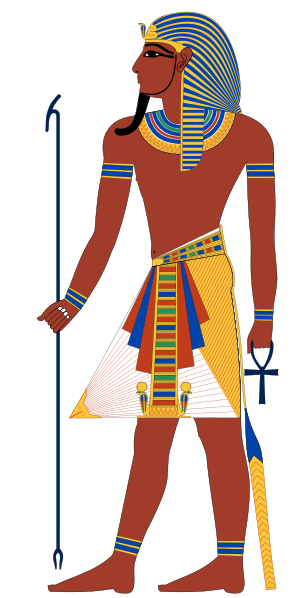
In this parshah there is a lot of drama. Joseph, who proved himself an apt dream interpreter last week, gets a chance to analyze two very troubling dreams had by the pharaoh himself. In the pharaoh’s first dream, seven head of strong cattle come up from the River Nile, followed by seven more who are weak. The weak eat the strong so that there is no trace of the strong remaining. In the second dream, a similar episode occurs involving stalks of corn. Joseph’s interpretation through God is that Egypt will experience first a seven-year period of high production and prosperity, followed by seven years of famine.
In an interesting bit of his interpretation, Joseph tells the pharaoh that he had two similar dreams because it is God’s way to assure pharaoh that the events alluded to in the dreams will most surely pass. In fact, repetition is a common device used in the Torah to indicate truth. The earliest example is when God tells Adam and Eve not to eat from the Tree of Knowledge. The common translation of this episode is, “For if you eat of it, you will surely die”. The actual translation would read, “If you eat of it, dying you shall die”. The repetition in the phrase indicates truth by way of emphasis. Accordingly, the 14 year period of feast and famine does happen in Egypt.
There is a running theme in this parshah is preparedness. Pharaoh’s dreams are messages from God to be prepared for trouble, even when life is good. Essentially, it is a lesson about the necessity of foresight in a leader. The entire Egyptian Empire relies on the pharaoh to see beyond immediate circumstances. In this parshah, those who don’t even attempt at foresight suffer.
When Joseph is first called before the pharaoh to interpret the dreams, the Torah takes time out to tell us that Joseph made sure to shave and bathe. As always, there are no wasted words in the Torah. This begins the theme of preparedness. To use one of our own colloquialisms, Joseph puts his best foot forward. By preparing himself physically, he also prepares himself mentally. Standing before the pharaoh, Joseph is confident but not arrogant, he is honest and he is polite.
Compare this to the scenes later in the parshah when Joseph’s brothers come to Egypt to buy food. They are only concerned with their immediate problems, first their hunger and then Joseph’s request to see their youngest brother. Because they show no foresight, because they are ill-prepared for everything, Joseph’s brothers experience fear and loss.
This is a lesson we can easily apply to our own lives. Preparing ourselves, even in superficial, cosmetic ways, can help us enter a focused mindset. Thinking beyond our immediate conditions can save us a lot of grief in the future when those conditions change. Taking time to groom, dress and practice for a job interview can make the difference between employment and rejection. Mental preparation for the loss of a sick loved one can make the difference between strength in a time of need and incapacitation by grief. Life, in its good times and bad, happens. How well we face those changes in life is entirely up to us as individuals.
No Comments »
|