Archive for the “Shabbat” Category

Shabbat Shalom and welcome to Judeo Talk. The Torah portion for this week is Parsha Yitro, Exodus 18:1-20:23.
This parsha is short, but there are two good reasons for this. First, the episode in next week’s parsha must stand on its own (we’ll see why next week) and second, there are two very important things that happen in Yitro.
The more obvious of the two is the giving of the Ten Mitzvot. Remember, we won’t be referring to them as “Commandments” here, as we discussed in a previous post. But before we get to the Mitzvot, there is an interesting and arguably more important scene between Moses and his father-in-law Jethro, for whom the parsha is named.
As the Israelites travel farther from Egypt they end up in Midian, which is where Moses lived after being banished from Egypt for killing a task master. In Midian, Jethro still lives and takes care of Moses’s wife Zapporah and their two sons. Moses and Jethro have a happy reunion and basically catch up with one another. I’m a big fan of scenes like this. The Torah frequently features family reunions. The fact that the holy texts take time out to reinforce the importance of loved ones in our lives is wonderful and reassuring. Even as Moses is the prophet of God and the leader of an entire nation, he is still only human. He misses his family and shows them deference despite his social station. He even takes advice from his father-in-law, who is really the only parental figure Moses has left in the world. That in itself is an interesting commentary about family responsibility.
When Jethro sees that Moses spends all day, every day acting as the judge for every little problem the Israelites have, Jethro tells Moses that he needs to make some changes lest he burn himself out and fail as a leader. Jethro suggests that instead of just interpreting the law for them, Moses ought to teach the law to all of the people so they can be judges for themselves. He also tells Moses to delegate responsibility to the righteous for smaller groups. Specifically, that there ought to be community leaders for groups of thousands, then for groups of hundreds within those thousands, then groups of tens within those hundreds. Essentially, Jethro is suggesting a Federal, State, and Local governmental system, freeing Moses to address only those issues deemed too difficult for the many different delegated judges. Essentially, Moses is now the Supreme Court. This sets a precedent for keeping the big-wigs out of local affairs while still maintaining a single rule of law throughout the nation.
This is why I say that the delegation segment is more important than the Ten Mitzvot. These are really just a few more common sense laws to add to an already established list of Israelite codes of conduct. This parsha begins a process that never really stops throughout the Torah and beyond. Most of the Torah from this point forward is concerned with the creation of laws by which the people agree to live. The laws get more nuanced and complex as the nation gets closer to solidification, but for now they are just day-to-day modes of order. The only thing that sets the Mitzvot apart from other laws is that they are handed down directly from God to the people, so their authority is absolute. These are laws that cannot be debated. If Moses is the Supreme Court, God is the Constitution.
No Comments »

Shabbat Shalom and welcome to Judeo Talk. The Torah portion for this week is parsha Beshalach, Exodus 13:17-17:16.
Often times when modern people reach this part of the Torah they recoil at the sudden appearance of war in this tale of redemption. Without the context of life in the ancient Near and Middle East, this uneasiness with bloody conflict is understandable. Unfortunate though it may be, it has always been an essential aspect of nation building for a people to prove their ability to defend themselves from attackers. Still to this day, even those organizations ostensibly concerned with fostering peace make provisions about war. The United Nations has a list of criteria for those who want to claim themselves a sovereign nation. One criterion is that the nation demonstrate a capability to defend itself from foreign threats. As the Israelites leave Egypt, they are immediately faced with just such an issue.
When Moses leads his people from Egypt, the pharaoh attempts to recapture them one last time. This is the famous scene at the Red Sea. God instructs Moses to raise his staff over the sea as if to divide it and indeed the sea parts. As the Israelites cross the dry sea bed, the water itself is described as being a wall on either side of them. When the Egyptian army pursues them into the sea, the water crashes down on top of them.
But there is something here that should give us pause. The Torah is usually fairly exact with its language. While the traditional interpretation of this passage is that the Israelites safely crossed the sea, then the sea went back to normal when the Egyptians entered, the language itself doesn’t present us with that much linearity. It could just as easily be read as the two events happening simultaneously. Aside from being a miracle, how could this be possible?
Once again, we must approach the Torah on the level of metaphor. The passage clearly states that the Israelites find the bodies of the Egyptian soldiers washed up on the opposite shore, indicating that the Egyptians drowned more or less at the same time as when the Israelites crossed. In one sense, this makes the scene less magical, but it also makes the lesson that much stronger. Pharaoh says of the Israelites at the bank of the Red Sea that they are “bound up in the wilderness”. As we saw last week, the “wilderness” is a common allegory for the confusion of life. In this passage, those who follow God in the sea, the wilderness, survive. Those who follow violence and lust aren’t so lucky.
When the Israelites are on the far shore and the conflict is over, Moses stands before the people and essentially composes a song of glory. That song lists God’s victories and therefore the victories of the Hebrew people by association. It sounds like any glory song of the era. Like much of ancient Greek poetry, it’s a way to rattle swords and impress other nations with the strength of a people. A portion of Moses’s song became a major prayer in modern liturgy. The Micha Mocha prayer is pulled from the middle of the glory song. Before it was a rabbinic prayer, Micha Mocha was a common battle cry used by a number of famous generals in Jewish history. It is essentially a cry that says, “My God is too powerful to be beaten. A lot of people have tried and we destroyed them”. While we today don’t have as much use for glory songs or battle cries, these things were of the utmost importance in establishing a respected presence in the ancient world.
No Comments »

Shabbat Shalom and welcome to Judeo Talk. The Torah portion for this week is parsha Bo, Exodus 10:1-13:16.
Parsha Bo is one of the most important, pervasive segments of the Torah. The origins of some very important liturgy come from Bo, as do the first instructions for the holiday of Passover. But first, there are the concluding three of the ten plagues. They are locusts, darkness and the death of the first born.
The plagues themselves seem almost arbitrary. They are a strange mix of natural disasters that don’t seem to be related. Upon deeper reading, their connection becomes apparent. As we saw last week, these plagues are not intended as a punishment for Egypt or even to coax the pharaoh to release his slaves. Rather, they occurred as a demonstration, to make a point. Each of the ten plagues is a direct assault on one of the gods in the Egyptian pantheon through some symbol of their presence. For example, the turning of water into blood was the first plague, and rightfully so. Most of the water in Egypt would have come from the Nile river. According to Egyptian mythology, the god of the Nile was Hapi the father of the gods, and later Osiris the god of rebirth.
The last two gods assaulted by the ten plagues are Ra, the supreme god and god of the sun, and the pharaoh, seen at the time as being a god given flesh to rule over the people. The death of the first born is a plague directed at the pharaoh’s ability to maintain his line’s hegemony in Egypt.
Before the tenth and final plague, God instructs Moses to tell the Israelites to mark their doors with the blood of a sacrificial lamb as a sign to spare their houses from the death of the first born. In addition, the lamb is supposed to be made into a feast for the house. The instructions also demand that this observance should be repeated every year at the same time. In addition to the eating of a sacrificial lamb, the Israelites are told to eat only unleavened bread for the entire week of the festival. The reason for this becomes apparent later in the parsha. When the Egyptians finally tell the Israelites to leave the land, they push them out in a hurry. It all happens so fast that the Israelites don’t even have time to let the dough of their bread rise.
This parsha has one of my favorite lines in the entire Torah. God instructs the Israelites to prepare themselves to leave Egypt by saying they should eat their lamb feast, “With your loins girded, your shoes on your feet and your staff in your hand.” What an excellent line. The feast of the pascal lamb isn’t some random ritual. These people needed to eat a good meal to get up their strength for the long journey ahead. This line has so much meaning beyond the literal. As we will see, the voyage from slavery, through the wilderness and into the promised land is a great metaphor in the Jewish faith. It is an allegory for the search for enlightenment. God’s instruction for all those who seek truth is to begin that process prepared for the long haul.
The Israelites begin their march out of Egypt at the end of this parsha. The victory here, as the proverb goes, is not the end, it is just the beginning. They go with the instruction to pass this story down through the generations and to maintain these traditions. It is a subtle sign that all people, Jewish or otherwise, will face their own Egypt, their own personal slavery. Parsha Bo is a reminder that the road out of each individual’s Egypt is one that requires the utmost preparation.
No Comments »
Shabbat Shalom and welcome back to Judeo Talk. The Torah portion for this week is Va’eira, Exodus 6:2-9:35.
In last week’s parsha, the Israelites first became slaves in Egypt and God enlisted the prophet Moses to demand their freedom from the pharaoh. This week, Moses, his brother Aaron and both their families travel to the heart of Egypt to do just that. As God previously told Moses, the pharaoh rejects the demand. The result of his “hardened heart” is a series of miraculous plagues brought down upon Egypt. In Va’eira, we get to see seven of the infamous Ten Plagues. But before we get to that, there are two things that bear discussing.
First, there is the episode with the rods turning into snakes. When Moses and Aaron approach the pharaoh, they demonstrate the power of God by casting Aaron’s staff on the ground where it transforms into a snake, as God said it would. The pharaoh, unimpressed, calls in his own magicians who perform the same trick. However, the snake from Aaron’s staff devours the others. This is an interesting moment. The obvious connotation is that God cannot be outdone or overwhelmed. But there’s something else here. Recall several weeks ago when a previous pharaoh called Joseph to him to interpret his dreams. In those dreams, the weak and sickly grain, then cattle literally devour the strong grain and cattle. At the time, the interpretation is that a period of feast will be followed by a period of famine. Still, it’s hard not to see some connection between those dreams and the moment with the snakes. Our minds are drawn to the original pharaoh’s dreams because it seems they not only foretold the famine, but also the rise of the Israelites.
The other thing people often ask is why God told Moses to demand the Israelites’ freedom when God knew from the beginning that the pharaoh would deny it. The simplest and most likely reason is that this isn’t a story about enlightening the pharaoh, it’s the ultimate demonstration of God’s power. An example is being made of Egypt for the express purpose of passing the story of the Exodus through the generations. Still to this day, “Egypt” is a metaphor in the Jewish faith for times of difficulty, confusion and disconnection. In this story, the Ten Plagues are not a consequence for wrongdoing, they’re the whole point.
This week’s parsha begins what is possibly the greatest, most far-reaching allegory in Judaism. This truly epic story tosses around a lot of loaded terms and is rife with symbolism. There is a lot to contemplate of slavery, both literal and metaphorical, as there is much to consider in the questions of the trials of life. These terms- Slavery, Freedom, Holiness, and even what exactly makes a true Nation; these are the concerns of a large part of Jewish philosophy. As we enter into the most fantastical part of the Torah, it’s very important to not get lost in the powerful imagery and to keep ourselves from disconnecting from their underlying purposes. We are 21st century people. We don’t build pyramids by hand, we don’t witness grand visual miracles and many of us take our freedom for granted. There is knowledge here in the story of the Exodus, but in the coming weeks it is of the utmost importance that we approach the text with the intent to dig into the metaphors.
No Comments »

The Torah portion for this week is Shemot, Exodus 1:1-6:1.
There are many very well-known stories in this parsha. It is the beginning of the book of Exodus, the story of how the Hebrew people left Egypt and received the Ten Mitzvot and the Torah. It is essentially the story of how a people not unlike most other peoples at the time came to be the first Jews.
But before that happens, they have to endure a lot of hardship. Just like Joseph, the Israelites first go through a period of slavery and pain, then through great and difficult acts they become the people they were meant to be. In Shemot, we learn how the Israelites came to be slaves in Egypt in the first place. If you recall from last week’s parsha, Joseph called his entire clan to come live in Goshen, a territory of Egypt. Because of Joseph’s service, his people were welcome. Unfortunately, the king of Egypt from Joseph’s time dies and the next king is far less kind. Because the Israelites become a numerous and prosperous people, the pharaoh worries that they would be a liability in times of war. In fact, there are so many Hebrews that the pharaoh believes they would overtake Egypt should they side with Egypt’s enemies.
The pharaoh’s solution to this problem is to enslave the Israelites in order to weaken them. When that doesn’t work, he orders the nurses of Goshen to kill every newborn Israelite male. This is the parsha’s first instance of women playing an integral role in the survival of the Hebrew people. Against the pharaoh’s wishes, the nurses secretly save the boys of Goshen and lie to cover up the rescue effort. For this, God protects them.
It’s an all-too-frequent exercise to point out the misogyny of the bible. Certainly, there are many instances of females being treated worse than males simply for being female. However obvious these moments are, for its time the Torah is actually startling in its progressive outlook on gender. In fact, Exodus is a book that is particularly focused on the raising up of women. The nurses not only defy a man, they defy the most powerful man in Egypt, all because they have their own notions of what is right. That God protects them is a sign that free-thinking women are exalted in the Torah. The story could just as easily feature men saving the Israelite boys. The fact that women are the saviors is deliberate.
There is another, very similar episode later in the parsha. After God charges Moses with the task of going to the pharaoh and demanding the release of the Israelites, Moses is in something of a hurry. He packs up his family and starts on the road to central Egypt. His pursuit is so single-minded that he neglects to circumcise his newborn son. Just because Moses is God’s emissary to the pharaoh doesn’t mean he gets special privileges. God begins to kill Moses for his transgression. The only reason he survives is because his wife, Zapporah, realizes what’s happening and quickly performs the circumcision. In a particularly dramatic moment, Zapporah casts the recently amputated foreskin at Moses’s feet.
Repetition, as I’ve previously mentioned (no pun intended), is a common Toritic method of creating emphasis. That we get two separate episodes of women saving the children of Israel despite the men around them is important. We are meant to see these women as strong, active and mindful individuals. It’s rather plain that, at least in this parsha, the women have a much more solid moral core than the men. They are not passive nurturers, but people willing to fight for what they believe is right and true. This not only lifts them up, it plants a responsibility in them that will follow for the rest of Jewish history.
No Comments »
Shabbat Shalom, everyone, and an extra prayer for peace in Gaza. It is my hope and the hope of many in this world that this time next shabbat the conflict will have ended.
The Torah portion for today is Vayechi, Genesis 47:28-50:26. In this parsha, we see the deaths of both Jacob and his son Joseph. In the sense of raw plot, not a lot happens in this parsha, but there is a great depth of symbolism in the little bit that does happen.
The parsha opens with the aging and eventual ill health of Jacob, the last of the three patriarchs. As we saw last week, Joseph revealed himself to his family and gave them a home in Goshen, a territory within Egypt where he was a powerful political figure. As Jacob lay dying, he requests that his body be taken back to Canaan so he can be laid to rest in the same cave as his parents Isaac and Rebecca, his grandparents Abraham and Sarah, as well as his wives Leah and Rachel. But before that happens, there is a very interesting episode involving Joseph’s sons, Manassah and Ephraim.

At this point, Jacob is blind and infirm. He calls Joseph to him to explain his burial wishes and also to bless Joseph and his sons. Jacob gives a blessing to the boys, his left hand on the head of Manassah and his right on the head of Ephraim. In that culture at that time, the right hand represented the stronger and the better side of things. In this case, when Jacob passes the blessing of God’s promise to make his descendants a great and prosperous people, he gives the better part of the blessing to Ephraim. At first, Joseph believes his father is mistaken because he is blind. Ephraim is the younger of the two brothers and therefore not traditionally entitled to a greater portion of an inheritance. But when Joseph attempts to correct Jacob, Jacob insists that he knows exactly what he’s doing and that the blessing of the second born is intentional.
Later, as Jacob essentially reads his last will to his sons, he once again breaks with the tradition of allotting inheritance by the order of birth. Rather, Jacob gives his portions and blessings to his sons based on their righteousness. Those who were violent get nothing, those who were irresponsible get next to nothing, those who were lazy get very little, and those who were good and holy inherit wealth and power. Interestingly, this part of the parsha reads like a poem pasted into the regular story. It is full of metaphors and powerful imagery. This isn’t in a poetic format just to be fancy. Jacob’s sons are each the progenitors of the famous twelve tribes of Israel. The listing of their crimes and virtues is epic because it represents an entire nation, not just a family.
This is not the first, nor the last time the Torah uses small groups of people to represent whole societies. This episode belongs to a recurring theme in the Torah about responsibility throughout the generations. By allotting the wealth and blessings of his people based on merit, Jacob sets the precedent that the soon-to-be-Jewish people are not just another dynasty ruled by notions of power. Not only does this create a focus on justice, it also serves as a strong allegory for how we affect future generations with our present acts. Like this story’s previous threads about preparedness, the reading of the will of Jacob warns us that the lives we lead echo throughout time. A life of violence leads to a fallow future, a life of complacency leads to empty servitude. We are most certainly meant to read this portion and ask ourselves what legacy we will leave to future generations. Do we deserve to receive the blessings of our fathers, or have we yet to earn it?
1 Comment »
Shabbat Shalom and Happy New Year. The parsha for this week is Vayigash, the story of how the House of Israel actually came to live in Egypt. This is a particularly interesting episode in the Torah because it is one of the most overtly literary moments in the Five Books. It is full of drama, symbolism and most of all foreshadowing.
This parsha starts in the middle of a chapter. Judah entreats Joseph to reconsider his decision to take Benjamin, Joseph’s youngest brother, as a bondsman after framing him for theft. Joseph chooses to finally end his ruse and reveal his true identity to his brothers. When they come before him to beg for the release of Benjamin, Joseph tells them who he is. He also tells them that he harbors them no ill will, saying that it was God who sent him to Egypt, not his brothers.
Here we have an interesting opportunity for a philosophical discussion. This entire parsha sits at the fulcrum of many events, past and future, that indistinguishably mix the good with the bad. There is an inexplicable sense of cause and effect. Joseph is betrayed by his brothers and languishes in slavery, but had he not he would never have risen to his position of authority in Egypt. By the same turn, had Joseph not come to Egypt the pharaoh wouldn’t have been prepared for the seven years of famine and the entire empire would have starved, including Joseph’s family in Canaan. Like dominoes, events keep triggering new events.
After Joseph reveals himself to his brothers, he invites his entire family to come to Egypt from Canaan. This includes dozens of people, essentially an entire clan and the seeds of a nation. Of course, had Joseph not invited his family to live in Egypt, the Israelites would never have become slaves to Ramses, and therefore never would have been freed by God and led to the Torah.
The story of Joseph is the story of the Jewish people in microcosm- To go from comfort to slavery, then from slavery to humble exaltation. The parallel events in both stories are convoluted. The bad directly results in the good, with the good paving the way to the bad. The question we must ask ourselves is, how do we approach life when this dynamic is ever-present?
Everyone experiences their share of good times and tragedies. Our relationships with one another are complex and the longer we know one another the more likely we are to retain some kind of emotional “baggage” that further complicates how we feel and how we act. The stories of Joseph and then of the Israelites are stories of the human condition. Not only are we bound to experience ups and downs, we are also generally incapable of seeing what good or bad things will result from the conditions of the present. It is exceedingly easy to simply remind people to have faith that good will grow from the bad. As the parsha says, God went with the Israelites when they went to Egypt. But as we discussed last week, “going with God” does not guarantee happiness.
The best insight we can gather from this parsha is that, in all of this complicated business with the mixing of good and bad, there are still moments of volition. Joseph chooses to re-embrace his family. God does not command it of him, neither does etiquette. In the midst of all this confusion, Joseph listens to his emotions and makes a decision in his life to welcome some goodness into the present. We small humans will spend most of our lives getting tossed around by past, present and future bouts of good and bad. What makes our lives meaningful are those rare opportunities for choice.
No Comments »
Shabbat Shalom. It’s time once again for Shabbat Torah Study. Today’s parshah is Mikeitz, Genesis 41:1-44:17.
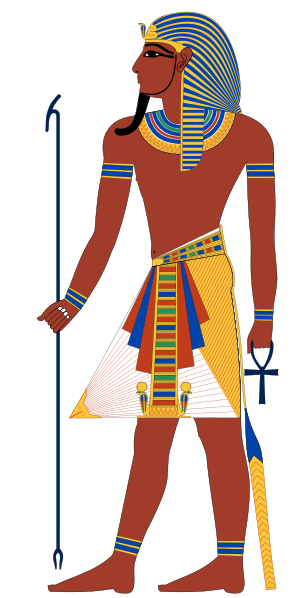
In this parshah there is a lot of drama. Joseph, who proved himself an apt dream interpreter last week, gets a chance to analyze two very troubling dreams had by the pharaoh himself. In the pharaoh’s first dream, seven head of strong cattle come up from the River Nile, followed by seven more who are weak. The weak eat the strong so that there is no trace of the strong remaining. In the second dream, a similar episode occurs involving stalks of corn. Joseph’s interpretation through God is that Egypt will experience first a seven-year period of high production and prosperity, followed by seven years of famine.
In an interesting bit of his interpretation, Joseph tells the pharaoh that he had two similar dreams because it is God’s way to assure pharaoh that the events alluded to in the dreams will most surely pass. In fact, repetition is a common device used in the Torah to indicate truth. The earliest example is when God tells Adam and Eve not to eat from the Tree of Knowledge. The common translation of this episode is, “For if you eat of it, you will surely die”. The actual translation would read, “If you eat of it, dying you shall die”. The repetition in the phrase indicates truth by way of emphasis. Accordingly, the 14 year period of feast and famine does happen in Egypt.
There is a running theme in this parshah is preparedness. Pharaoh’s dreams are messages from God to be prepared for trouble, even when life is good. Essentially, it is a lesson about the necessity of foresight in a leader. The entire Egyptian Empire relies on the pharaoh to see beyond immediate circumstances. In this parshah, those who don’t even attempt at foresight suffer.
When Joseph is first called before the pharaoh to interpret the dreams, the Torah takes time out to tell us that Joseph made sure to shave and bathe. As always, there are no wasted words in the Torah. This begins the theme of preparedness. To use one of our own colloquialisms, Joseph puts his best foot forward. By preparing himself physically, he also prepares himself mentally. Standing before the pharaoh, Joseph is confident but not arrogant, he is honest and he is polite.
Compare this to the scenes later in the parshah when Joseph’s brothers come to Egypt to buy food. They are only concerned with their immediate problems, first their hunger and then Joseph’s request to see their youngest brother. Because they show no foresight, because they are ill-prepared for everything, Joseph’s brothers experience fear and loss.
This is a lesson we can easily apply to our own lives. Preparing ourselves, even in superficial, cosmetic ways, can help us enter a focused mindset. Thinking beyond our immediate conditions can save us a lot of grief in the future when those conditions change. Taking time to groom, dress and practice for a job interview can make the difference between employment and rejection. Mental preparation for the loss of a sick loved one can make the difference between strength in a time of need and incapacitation by grief. Life, in its good times and bad, happens. How well we face those changes in life is entirely up to us as individuals.
No Comments »
The Torah portion for this week is Vayeishev, Genesis 37:1-40:23. This portion, or parasha, tells three stories, but today we will be concentrating on the trials of Joseph.
There are two major themes running through this parasha: Justice and Brotherhood. Tied to these two concepts is the matter of faith. In circumstances where brothers don’t act very brotherly and the judgments of others are not just, the characters must choose to either despair for the trouble in their lives or to have faith that everything will come to good in time.
It is important to remember that no story in the Torah exists in isolation. Every story can and often does make reference to an earlier story. Sometimes there is foreshadowing of stories yet to come. When we read Vayeishev, it is easy to see the parallels in the conflict between Joseph and his brothers, and the conflict between Cane and Abel, the first and therefore quintessential brothers.
When Cane kills Abel, God asks Cane where Abel has gone. Cane responds, “Am I my brother’s keeper?” By the punishments that result, we can only conclude that the answer is yes. So, when Joseph’s brothers conspire to harm him, they are failing in their duty to love, protect and teach him. They hate him for his arrogance, for telling them that his dreams foretell his dominion over the entire family. But when we look at several clues placed throughout the parasha, it is obvious that Joseph begins this story as a very young person. He doesn’t take the family flock to pasture like his brothers and he is later described as having grown into a man after several years as a slave in Egypt. Joseph, compared to his brothers, is a child. It was not the duty of his brothers to compete with him, but to teach him.
All the same, Joseph already had a path set out before him. Like many of his ancestors, he would have to come into his own by way of struggle and conflict. In the beginning of his story, Joseph has only dreams with which to approach life, no real experience. When his brothers remove him from this ease and comfort by selling him into slavery, he grows wiser and holier. When he is stripped of his freedom and dignity a second time by being falsely accused of pursuing his master’s wife, Joseph grows wiser and humbler still.
Throughout Joseph’s story, it is reiterated that God is with him. This is not just a phrase to reassure readers that he will be safe. It is an indication that Joseph will continue to grow and learn. This is a frequent setup in the Torah. To “be with God” means just as much that conflict is on its way than it means victory is assured.
Joseph’s story really begins when he stops to ask for directions to his brothers and their flock. He asks someone merely referred to as Ish, meaning simply “a man”. Joseph’s father, Jacob, also had an experience with someone merely referred to as Ish. This was the individual with whom Jacob wrestled the day before he received the name Israel, signaling his growth into the man he was meant to be. Many sages and scholars over the years have discussed the occasional appearance of Ish in the Torah. Much of the study surrounding these strange moments suggest that this simple man who meets many of our biblical figures is, in fact, God pointing the way to destiny.
No Comments »
|